

Contents:
- What the Botty Reviews Sample Consists Of
- First Impressions: “Set It Up Once” as a Recurring Theme
- Getting Started and Connecting Botty to Hyperliquid
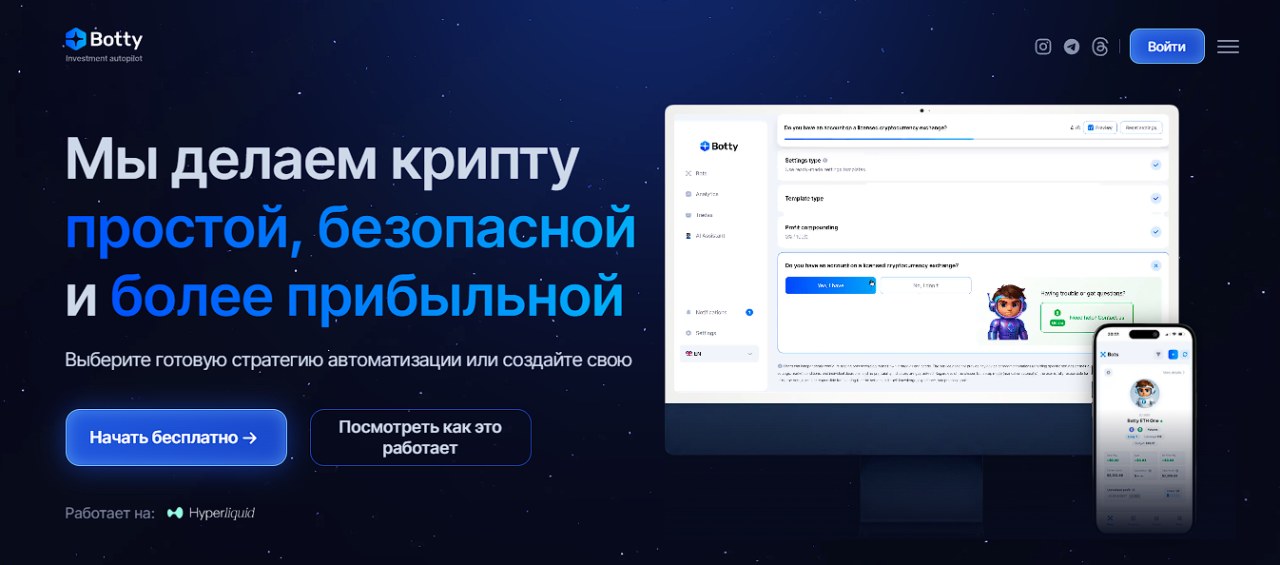
- Interface, Dashboard and Reports in Botty Reviews
- Automation, Time Savings and Fewer Emotional Decisions
- How Often Reviewers Check on Botty
- What Botty Replaced for Some Reviewers
- How Reviewers Perceive Botty’s Ready-Made Templates
- Control Over Assets and the Non-Custodial Model
- AI Guidance: One Review, One Situation
- Beginners, Experienced Users and Households
- How Reviewers Describe Their Results With Botty
- Outdated Details in Older Botty Reviews
- Risks and Expectations Behind the Reviews
- What the Reviews Can and Cannot Tell Us
- Conclusion: The Picture of Botty User Experience
User reviews show how an automated trading tool fits into ordinary life: whether people understand what the bot is doing and how they feel after weeks or months of letting it run. This article examines the publicly available Botty user reviews and asks a single question: what picture of the Botty experience emerges from them? Reviews can illuminate practical experience, but they cannot establish what every user will see, and that limitation runs through the whole analysis.
What the Botty Reviews Sample Consists Of
The material analyzed here comes from the review site vidhuk.ua. The Botty page there lists 36 reviews with an average rating of 4.1 out of 5. Thirty were visible and analyzed in full; all are dated 2026 and written in Ukrainian or Russian.
The size and composition of the supplied sample do not support statistically representative conclusions about the experience of all Botty users. The average rating describes that page, not the wider user base.
For context, Botty automates the execution of predefined strategy rules rather than predicting the market or copying another trader’s decisions. According to the current How Botty Works document, the platform is built around fundamentally strong assets such as BTC, ETH and SOL, with the same approach described for selected liquid stocks; the reviews refer only to crypto.
First Impressions: “Set It Up Once” as a Recurring Theme
A recurring theme in the supplied reviews is the idea of configuring something once and then stepping back. One user says he set up a conservative BTC grid a single time and now looks at it weekly instead of every ten minutes. Another reports that the bot has been running for six months without his intervention and calls the platform stable.
Reviewers rarely describe excitement; more often they describe relief and routine, suggesting they were looking for a calmer way to participate in the market rather than dramatic gains.
Getting Started and Connecting Botty to Hyperliquid
The reviews say little about the mechanics of connection. Several users simply mention launching the bot weeks or months earlier, and one reviewer who previously paid for Telegram signal subscriptions describes the process as choosing a template and letting the algorithm work. No review describes the first launch as confusing, but none walks through it step by step, so the sample does not allow a detailed judgment of how easy the start is.
One review describes connecting through exchange keys. This technical description appears to refer to an earlier version of Botty. According to current documentation, Botty is integrated with Hyperliquid and the connection is authorized with a single crypto-wallet signature through Hyperliquid’s official Builder Code mechanism. Botty receives permission to execute trades only; it does not receive withdrawal permission, and that restriction is enforced at the exchange level. The documentation says newcomers are guided by instructions, an AI assistant and the support team.
Interface, Dashboard and Reports in Botty Reviews
One reviewer describes the dashboard as clear. A user on maternity leave who checks her conservative grid weekly says the reports are short and easy to understand. A third reviewer emphasizes transparency as one of the things he values most, and a user who set his own parameters says he can see the logic behind each action the bot takes.
The reported experience is consistent with the current product documentation, which says the platform shows which orders have filled, which are waiting, where the average entry price sits and how much price headroom remains. Because Hyperliquid records trading activity onchain, the history can also be checked outside the platform.
Automation, Time Savings and Fewer Emotional Decisions
Time savings are the most frequently mentioned benefit in the Botty user reviews. A user who works full-time says the bot runs in the background while he is at his job. A long-haul driver describes running an ETH grid while on the road and finding dozens of small closed trades after a week.
Closely related is the theme of emotional discipline, which appears in several reviews. One user says automation removed his urge to win back losses emotionally, and that his results have been steadier since he stopped trading manually. Another describes a history of panic selling and buying into hype, and says the algorithm now simply executes the rules. A third reviewer, who says she lost more than she earned trading by hand, writes that the bot restored her belief that crypto can work without constant stress.
Reduced emotional involvement does not mean that human decisions or market risk disappear: the choice of asset, template, amount and reserve still belongs to the user.
How Often Reviewers Check on Botty
A further pattern concerns how often people look at their bots. Two reviewers, the user with the BTC grid and the user on maternity leave, say they check once a week; others describe longer gaps. One reviewer says he left the bot running during a vacation with little connectivity and came back to a positive balance; another says his bot has run for six months without intervention.
These accounts describe a shift from constant monitoring to occasional review rather than abandoning oversight altogether. The available reviews do not establish how typical such a rhythm is, but it is one of the more consistent threads in the sample.
What Botty Replaced for Some Reviewers
Some users describe Botty in terms of what it replaced. One reviewer says he previously paid for subscriptions to Telegram trading signals and that the bot now takes their place. Another contrasts his experience with copy trading and says he has more control and less stress. These reviewers appear to value choosing a set of rules over following someone else’s calls, though each comparison appears in only one or two reviews.
How Reviewers Perceive Botty’s Ready-Made Templates
Ready-made templates are mentioned often, and the conservative option stands out. One reviewer says he moved away from chasing high-risk coins to a conservative template and describes the result as boring but real. A user who lost half of his savings in crypto three years earlier says he deliberately chose a minimal, low-risk setup and that his deposit is growing slowly. A busy user says he simply relies on ready templates.
Reviewers rarely mention specific grid settings; they describe templates as a calm or cautious choice that fits their circumstances. One reviewer who uses a spot bot describes it as buying dips and closing trades in profit. Another, a former skeptic, says he left a medium-risk setting running for weeks and saw many trades opened; the label he uses is an older one, and the current equivalent is Balanced.
Botty currently offers three categories: Conservative, a spot strategy without leverage; Balanced, a futures strategy with a wider grid; and Aggressive, a futures strategy with a tighter grid and more frequent trading. The September 2026 investor presentation lists nine ready-made strategies, three each for BTC, ETH and SOL.
With spot trading the user holds the actual asset, so there is no liquidation; futures templates use leverage and therefore carry liquidation risk. One reviewer notes the absence of liquidation risk in spot templates, another mentions leverage limits on futures ones, and a third says he keeps half of his budget as a reserve; according to the documentation, futures strategies launch with a 50/50 split between capital at work and reserve by default.
One reviewer cites a historical figure shown for a SOL futures template and adds that the developers do not guarantee future returns. That caveat is accurate. The historical average annual figures shown for Botty’s ready-made templates range from approximately 8% to 58%, depending on the asset, strategy category, parameters and testing period. They are pre-calculated from at least five years of market history and describe past behavior, not a forecast or a typical user outcome.
Control Over Assets and the Non-Custodial Model
Trust in the structure of the platform is another recurring theme. Several reviewers say they value the fact that funds stay in their own account and that the platform cannot withdraw them. One user says the permissions are limited to opening and closing trades and that this is what builds his trust. A reviewer who describes himself as a developer says he checked the logic, confirmed that the permissions were limited to trading and ran a test grid on ETH that behaved as described.
These impressions match the current non-custodial model. Botty does not accept deposits and does not hold user funds; assets remain in the user’s own Hyperliquid account, and Botty acts as a technology layer that executes the chosen strategy. Botty also underwent an independent security audit by DigVel, which included penetration testing of botty.com; the certificate is dated April 21, 2026, and the results can be checked through DigVel. Neither removes market risk, but both address the concern reviewers raise about who controls the money.
AI Guidance: One Review, One Situation
A former skeptic who says he had lost money in manual trading since 2018 writes that AI help was useful when he had questions at night. This observation appears only once in the supplied sample, so it says nothing about how widely the assistant is used. Botty’s documentation does list an AI assistant among the forms of help available.
Beginners, Experienced Users and Households
Many reviewers describe themselves as former manual traders who lost money or felt worn out by monitoring; others appear to rely entirely on ready-made templates. The documentation states that Botty was built for people who do not want to become traders themselves.
More experienced users are also present. Besides the developer who checked the logic, one reviewer says he set his own parameters and contrasts the experience with copy trading, describing more control and less stress. Botty’s documentation confirms that experienced users can build their own configurations in addition to using templates.
A smaller but distinctive theme is family use. One reviewer says her husband used to trade manually late at night and that the household has become calmer since he set up a grid; she is considering one of her own. Another user says he and his wife each run a bot and discuss the results at the weekend. These are individual stories.
How Reviewers Describe Their Results With Botty
Results are described mostly in qualitative terms: modest but pleasant, growing slowly, steady, boring but real, a positive balance after a vacation. One reviewer says the algorithm got through two dips. These are users’ own descriptions, not verified results.
Only one reviewer gives a specific figure. He reports an overall return of about 29% across eight months with four active bots, says he has no major complaints, and adds that Botty suits a calm, passive approach rather than people seeking high gains. This is an individual report. It should not be treated as typical or used to predict anyone else’s outcome.
Outdated Details in Older Botty Reviews
Several reviews contain details that no longer match current documentation:
Connection: mentions of exchange keys or key-based access refer to an earlier setup. Today Botty connects to Hyperliquid through a wallet signature and Builder Code, with trading permission only.
Fees: a few reviewers say Botty charges only on successful trades or takes a commission from profit. Botty uses an activity-based fee. Its charge is incorporated into the Hyperliquid trading fee through Builder Code and applies when the relevant trading operation is executed; according to the investor presentation, that is 0.1% of each executed futures order and 0.3% on spot sell orders. There is no subscription, and if the bot does not trade, Botty does not charge a fee.
Historical testing: two reviews describe running historical tests as a user feature. The current public version does not offer user-operated testing with custom settings; templates display pre-calculated historical figures instead.
Labels and pricing: older risk labels correspond to the current Conservative, Balanced and Aggressive categories. One review also refers to a demo mode and earlier pricing terms for a community, which the current documentation does not describe.
These corrections concern technical descriptions, not the substance of what reviewers say about their experience. The reviewer who mentions exchange keys still describes choosing a template and letting it run, and those who misdescribe the fee model still value the absence of a subscription.
Risks and Expectations Behind the Reviews
Positive Botty reviews do not guarantee the same experience or financial result for other users. Results depend on market conditions and strategy parameters, and historical template figures do not promise comparable future performance. Spot and futures templates carry different risk profiles: futures strategies use leverage and involve liquidation risk. An open position may stay in drawdown for days or weeks, and calmer markets produce fewer trading cycles.
Botty executing rules automatically does not mean a strategy will always be profitable, and the fact that Botty cannot withdraw funds does not mean trading involves no risk.
What the Reviews Can and Cannot Tell Us
Some observations recur: time savings, less emotional trading, a preference for conservative templates, trust in the non-custodial model and the clarity of reports. Others appear only once: AI help at night, a specific percentage return, a developer’s test grid, a demo mode, the replacement of paid signal subscriptions. The sample shows how these users describe living with the product; it cannot show how common such experiences are or how reviewers’ results compare with those of users who did not leave a review.

Conclusion: The Picture of Botty User Experience
Taken together, the Botty user reviews on vidhuk.ua describe a tool that most of the reviewers in this sample use quietly in the background. They value not having to watch charts, feel less pulled into emotional decisions, often choose the Conservative template and describe their results in modest terms. Their trust rests largely on keeping funds in their own account, and several describe checking in weekly rather than watching every move. For readers researching Botty, the reviews are a useful window into practical experience, but they are best read as individual accounts rather than a measure of what every user of Botty will encounter.